
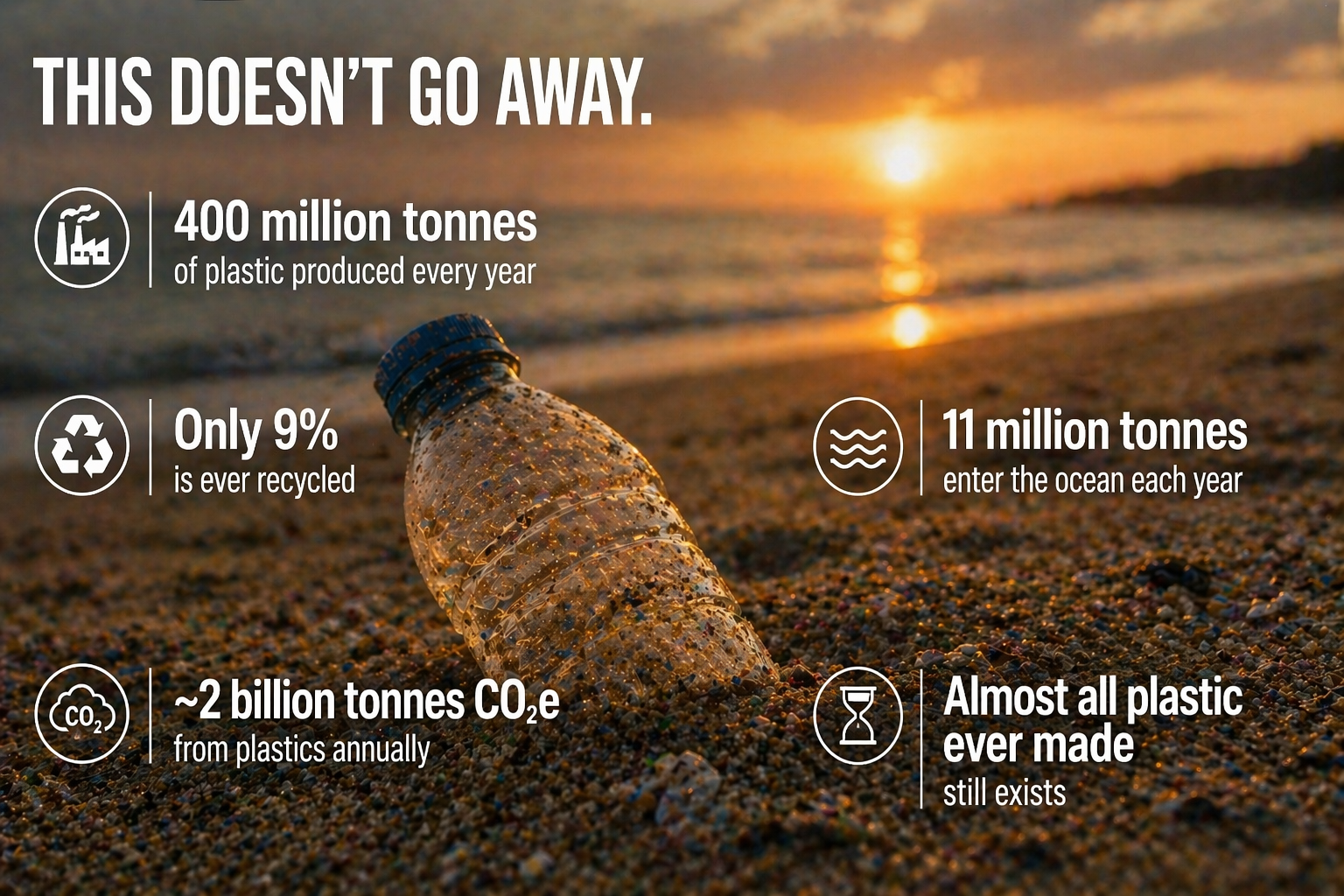
sustainable manufacturing and circular 3D printing
lower impact. better decisions. real outcomes.
We focus on useful parts, less waste, smarter material use and more efficient additive manufacturing without compromising performance or cost.
additive manufacturing built for lower waste
production that matches the job, not the process.
We select build methods that minimise unnecessary material use, avoid overproduction, and align with actual demand.
- No tooling waste or excess inventory
- Parts made only when needed
- Efficient builds with minimal scrap
recycled materials and circular manufacturing
designing for reuse from the start.
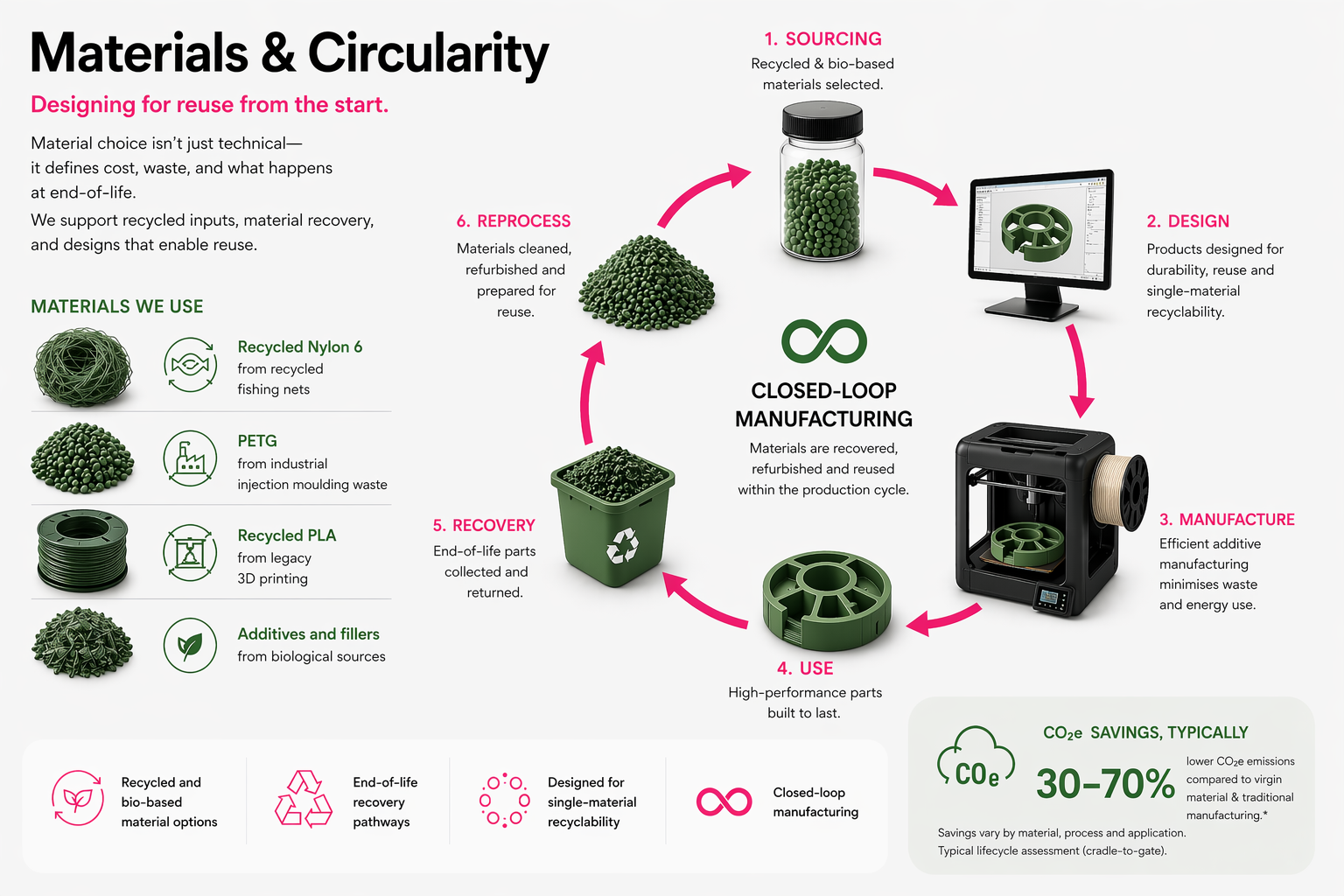
Material choice is not just technical. It defines cost, waste and what happens at end-of-life. We design with circularity in mind from the outset, selecting materials and processes that support reuse, recovery and long-term sustainability.
We work with a range of recycled and bio-based materials, including:
- Recycled Nylon 6 derived from fishing nets
- PETG sourced from industrial injection moulding waste
- Recycled PLA from legacy 3D printing streams
- Additives and fillers from biological sources
Our approach focuses on:
- Recycled and bio-based material options
- End-of-life recovery pathways
- Designing for single-material recyclability wherever possible
- Closed-loop manufacturing, where materials are recovered and reused within the production cycle
By combining recycled inputs with efficient additive processes, we can typically deliver meaningful CO₂e savings compared to conventional manufacturing, while maintaining performance and cost-effectiveness.
CO₂e tracking and measurable impact
evidence over assumptions.
We support projects where sustainable manufacturing needs to be demonstrated, not just claimed.
Work can be structured to provide clear, usable reporting.
- Estimated CO₂e impact per job
- Recycled content tracking
- Energy usage visibility (where applicable)
commercially useful sustainable manufacturing
better for the environment and the business.
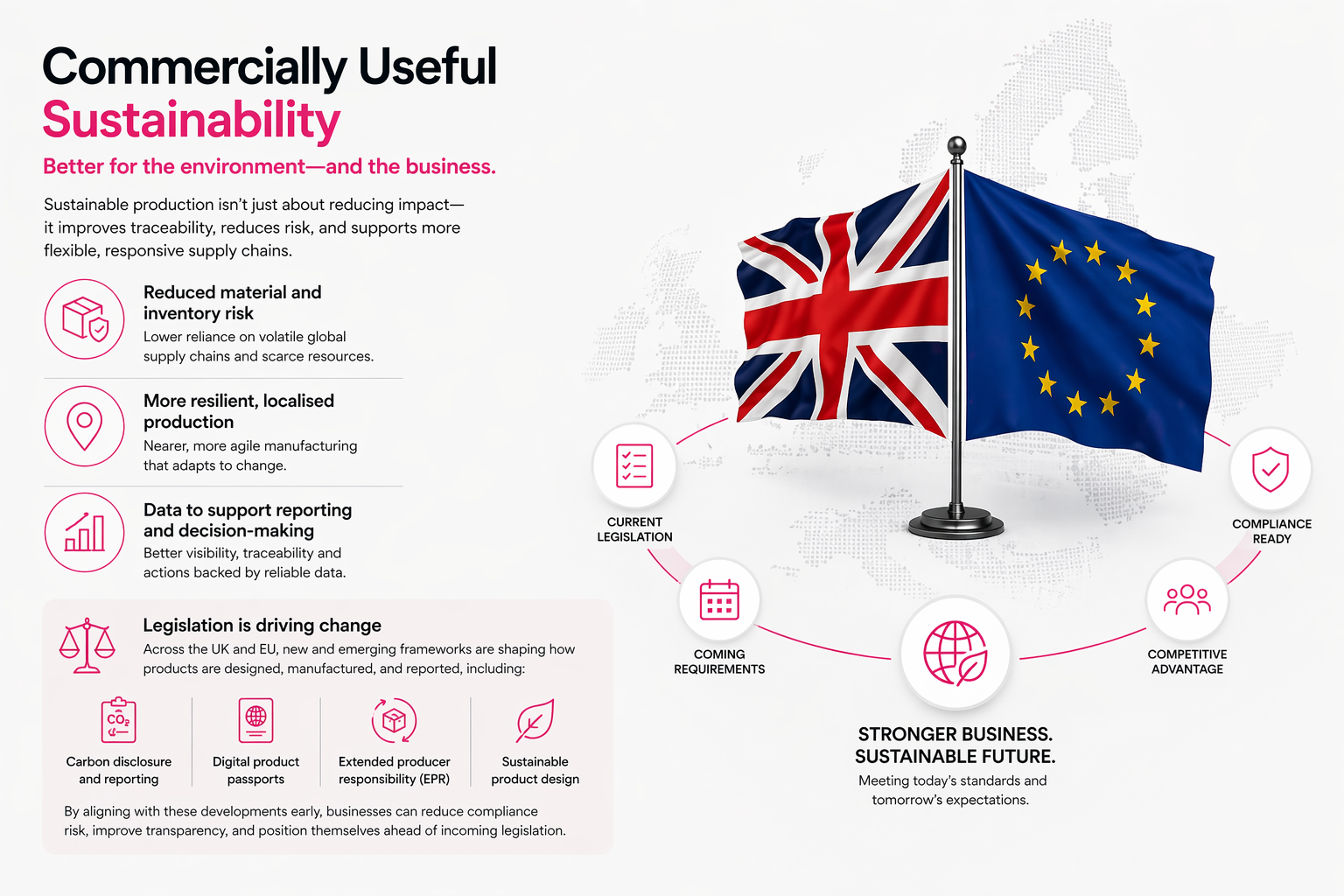
Sustainable production is not just about reducing impact. It improves traceability, reduces risk and enables more flexible, responsive supply chains.
Our approach supports:
- Reduced material and inventory risk
- More resilient, localised production
- Data to support reporting and decision-making
Increasingly, these benefits are not optional—they are being driven by regulation. Across the UK and EU, new and emerging frameworks are shaping how products are designed, manufactured, and reported, including requirements around carbon disclosure, digital product passports, extended producer responsibility (EPR), and sustainable product design.
By aligning with these developments early, businesses can reduce compliance risk, improve transparency, and position themselves ahead of incoming legislation.
start with the right manufacturing constraints
build sustainability in from the beginning.
If sustainability matters for your project, we factor it in from the quote stage so decisions on materials, process and production route are aligned from day one.
request a quote review additive manufacturing services