
thermal imaging heat dissipation in 3D printing
MyPrintPod used FLIR thermal imaging to study heat dissipation, cooling, bed temperature and print quality in 3D printing.
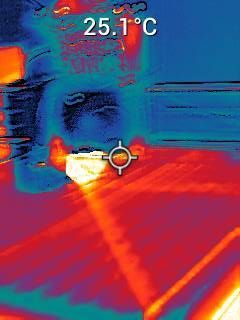
myprintpod has been studying how heat is dissipated during 3D printing.
the images from the study were taken with a FLIR TG165-X handheld thermal imaging unit.
the aim is to understand how cooling affects print quality, and how even the bed temperature is when printing larger parts.
why heat matters in 3D printing
temperature control is central to reliable additive manufacturing.
if the material cools too quickly, layer adhesion can suffer. If heat is uneven across the bed, larger parts can warp, lift or print inconsistently.
thermal imaging gives a clearer view of what is happening during the process, rather than relying only on machine settings or touch.
what the thermal images show
the first image shows the hot trail of plastic being deposited by the printer.
the thermal line shows that the plastic remains hot even after several seconds. That matters because each new layer is interacting with material that is still cooling and changing.
another image shows a test octopus still hot on its head, even though the rest of the body is only warm to the touch.
that is a useful example of how geometry affects cooling. Thicker or more concentrated areas can retain heat for longer than thinner sections.
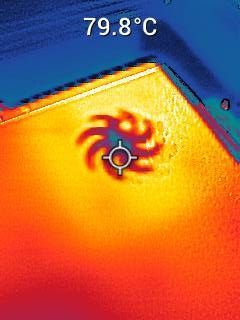
print bed temperature and larger parts
the study also looked at how evenly heat is distributed across different print beds.
some of the images compare heat distribution across two printer designs. Others show how the more optimal XL heat plate zones effectively, which can save power for smaller prints.
that is important for sustainability as well as print quality.
using only the heat that is needed can reduce energy use, especially when small parts are being printed on larger machines.
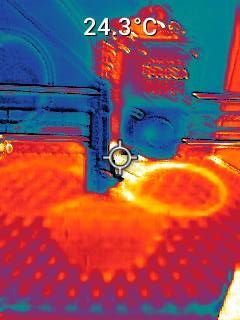
what myprintpod is learning
thermal imaging helps make invisible process behaviour visible.
for myprintpod, that supports better decisions around:
- print strategy
- bed temperature
- part orientation
- cooling behaviour
- material selection
- energy use
- quality control
better measurement leads to better production decisions.
for further information, contact info@myprintpod.com.
#3DPrinting #Sustainability #Recycling #ThermalImaging