
too fast: recycled nylon 6, layer adhesion and hidden stress
MyPrintPod explains what happens when recycled nylon 6 is printed too quickly, using Portcurno material from 0rCA as a practical process-control example.
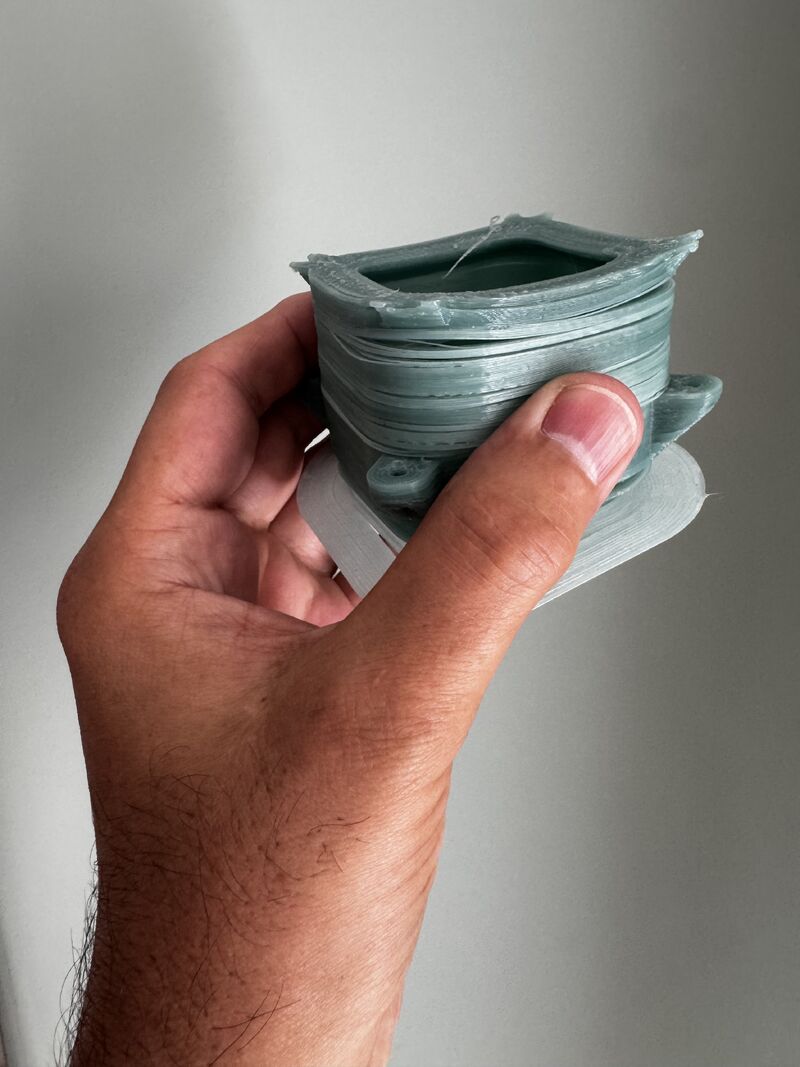
on Friday 1 August 2025, myprintpod had a useful reminder of a simple 3D printing rule: too fast is too fast.
this test used Portcurno recycled nylon 6 from 0rCA.
when the process is rushed, the result is clear. The layers do not bond properly, and the part starts to show the internal stresses generated during printing.
what went wrong
the part was printed too quickly.
with nylon, that matters because the material needs the right balance of temperature, speed and cooling time for the layers to fuse correctly.
if the print speed is too high, the previous layer may not be in the right thermal state for strong bonding. The result is poor layer adhesion and a part that is visibly weaker than it should be.
why the part curved
the curving of the part is also useful.
nylon shrinks slightly as it recrystallises. That shrinkage creates internal stresses in the part as it cools.
if those stresses are not controlled by the print strategy, temperature management and part design, the part can bend, warp or pull itself out of tolerance.
it is a good visible demonstration of the hidden stresses that can occur when making a 3D printed part.
why this matters for functional parts
for decorative prints, a failed test can be annoying.
for functional prototypes and production parts, process control matters much more.
that means paying attention to:
- print speed
- bed and chamber temperature
- layer bonding
- part orientation
- geometry and wall thickness
- cooling and crystallisation behaviour
the material may be strong, but it still has to be printed correctly.
recycled materials still need engineering discipline
recycled nylon 6 can be a very useful engineering material, especially where strength and lower CO₂e values matter.
but recycled does not mean simple.
the right settings, testing and process discipline are still needed to turn a good material into a reliable part.
for myprintpod, this is why practical testing is important. It helps define where recycled materials work well, where the process needs adjustment, and how to produce parts that are both useful and more sustainable.
#3DPrinting #RecycledNylon6 #Sustainability #Materials #ProcessControl