
sustainable maritime manufacturing from Clean Maritime Day and MarRI-UK
MyPrintPod attended Clean Maritime Day 2025 and the MarRI-UK National Roadmap meeting to explore how recycled materials, low-carbon production and 3D printing can support maritime decarbonisation.
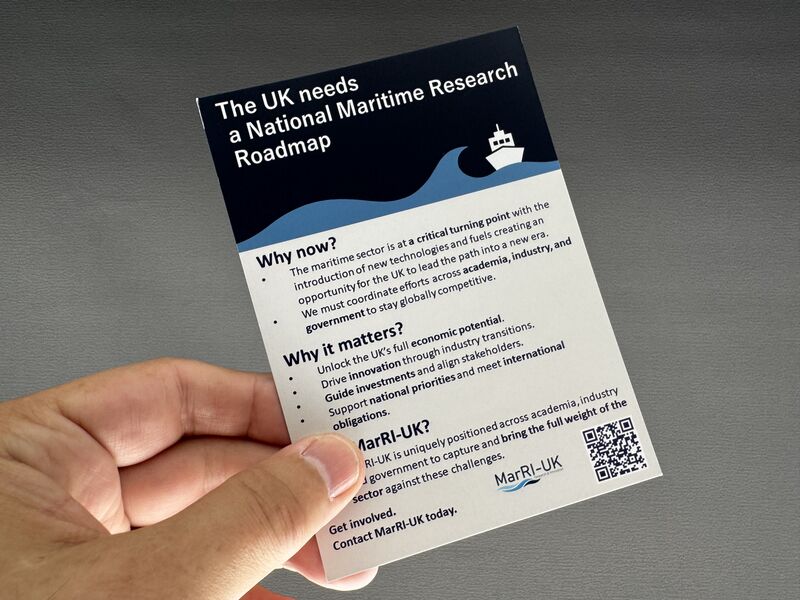
on Thursday 18 September 2025, myprintpod attended two maritime-focused events in London: Clean Maritime Day 2025 at Methodist Central Hall, and the MarRI-UK National Roadmap meeting at the Queen Elizabeth II Conference Centre.
both events were focused on the same broad challenge: how the UK maritime sector can decarbonise, modernise and build a stronger research and development roadmap.
for myprintpod, the link is clear. Sustainable manufacturing, recycled materials and low-carbon production methods all have a role to play in helping industrial sectors reduce impact without losing practical performance.
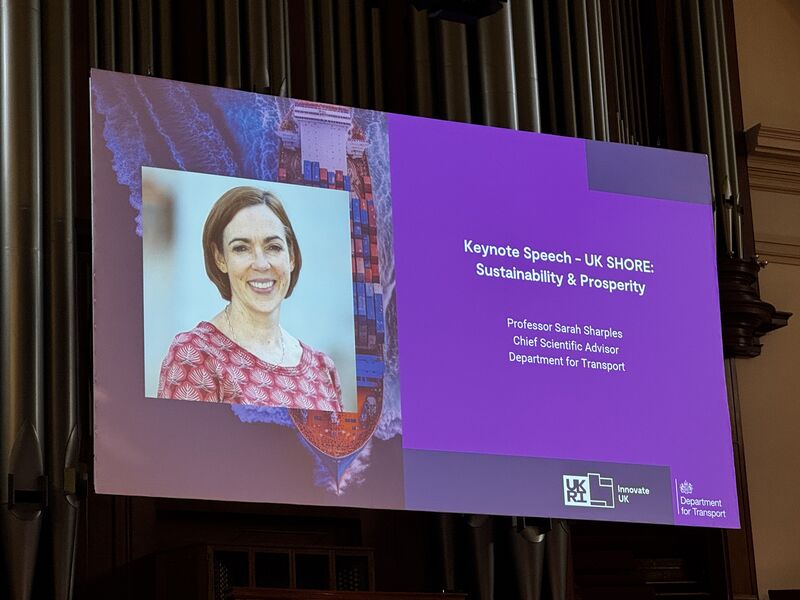
Clean Maritime Day 2025
Clean Maritime Day 2025 brought together people working across policy, industry, technology and research to discuss how the UK maritime industry can reduce emissions.
the event was supported by Innovate UK and the Department for Transport, with a strong focus on practical decarbonisation.
maritime is a significant part of the transport emissions picture. That makes the sector an important place to look for better materials, better processes and better ways of designing for long service life, repair and recovery.
the MarRI-UK National Roadmap meeting
later the same day, myprintpod also attended the MarRI-UK National Roadmap meeting.
this session focused on the maritime sector’s research and development roadmap, including the technologies and collaborations needed to move the sector forward.
for a manufacturing business, this matters because decarbonisation is not only about fuels and propulsion. It also depends on how parts are designed, made, maintained, replaced and recovered.
where 3D printing fits
myprintpod is interested in how additive manufacturing can support more sustainable industrial production.
in maritime, that could include:
- low-volume replacement parts
- tooling and fixtures
- functional prototypes for testing
- material-light component design
- recycled and low-carbon material routes
- localised production to reduce logistics and inventory risk
not every part should be 3D printed. But for the right applications, additive manufacturing can reduce waste, shorten development cycles and help keep useful equipment in service for longer.
materials, recycling and circularity
the maritime sector has demanding performance requirements, so sustainability has to be practical.
that means looking carefully at:
- recycled polymer options
- bio-based or lower-carbon material inputs
- repair and reuse pathways
- end-of-life recovery
- traceable material data
- per-part CO₂e reporting
for myprintpod, this is where circular manufacturing becomes useful. The aim is not only to make a part. The aim is to understand where the material came from, how the part performs, and what happens next.
what myprintpod took away
the strongest message from both events was that decarbonisation needs joined-up thinking.
policy, engineering, materials, data and manufacturing all have to connect.
for myprintpod, the opportunity is to keep developing additive manufacturing services that help sectors like maritime test ideas faster, use materials more intelligently and build practical evidence around sustainability.
#InnovateUK #DepartmentForTransport #Decarbonisation #Maritime #Sustainability #Recycling #LowCarbon #3DPrinting